2026 Signage Rules in Dubai: What Changed?
Opening a new shopfront? You need to know the latest signage rules in Dubai. The government just rolled out strict new visual standards in May 2026. The short answer to ‘what changed?’ Simplicity. Officials are cracking down on visual clutter.
If your sign is too bright, too big, or uses the wrong language format, it gets rejected. No exceptions. At Signex, we see business owners struggle with these updates daily. Let us break down exactly what you need to know to get your shopfront approved without the headache.
What Are the New Signage Rules in Dubai?
The days of flashing neon and crowded shopfront banners are over. Dubai wants clean, professional streets.
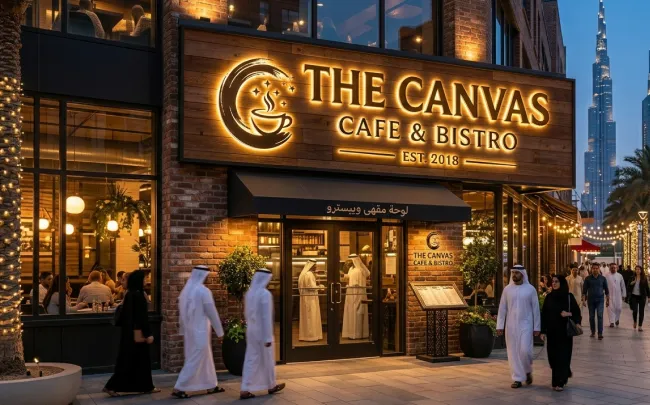
Under the new directives from the Dubai Civility Committee and DET, each commercial establishment gets one trade name on its shopfront. That is it. You cannot display multiple brand names or extra advertisements. If you try to squeeze in a second logo, you will fail the inspection. Your sign must also sit horizontally. Vertical installations are now officially banned.
The Single Signage Policy
- You can only have one, unified trade name per shopfront. Multiple signs for a single business are no longer allowed.
- This keeps the streetscape clean and makes it easier for customers to navigate commercial areas.
Language and Sizing Requirements
- Arabic text must sit directly above the English text. It cannot just be a random phonetic translation, either.
- You need a legally accurate, linguistically correct translation.
- Your English text cannot overpower the Arabic. The Arabic font must take up at least 50% of the visual space.
- Think of it as a sign of respect to the local culture. When designing your layout, you must use clear fonts.
- Standard options like the official Dubai Font or Arial work best. Highly decorative, unreadable scripts usually trigger a quick rejection from the authorities.
No More Moving Parts
- The new Dubai DED signage regulations state that content must remain static. Changing text, animated screens, and moving images on your main shopfront sign are strictly prohibited.
- The city wants to prevent driver distraction and maintain architectural harmony.
- You also need to watch your brightness. Bright white backgrounds are restricted.
- You must use approved measurement tools to ensure your LED lights do not blind the neighbors.
Choosing the Right Materials
- Your application must specify exactly what materials you plan to use.
- Regulators look for weather-resistant, non-flammable materials that can survive extreme summer temperatures and abrasive sand.
- Avoid highly reflective surfaces.
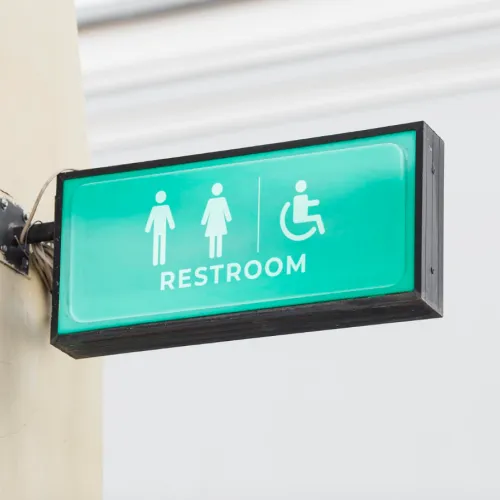
Unified Arabic Braille
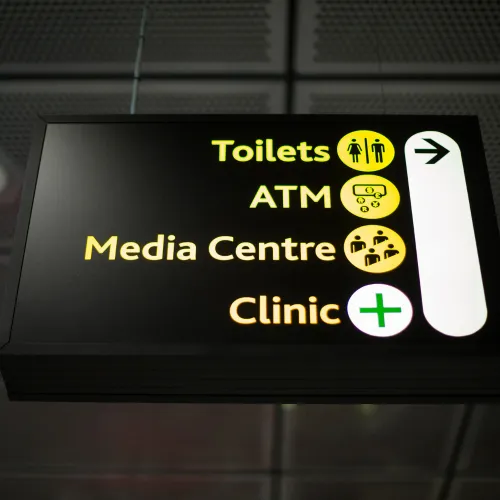
- Accessibility matters more than ever. If your signage includes physical touchpoints, standard English Braille is not enough.
- Dubai strictly requires Unified Arabic Braille. Ignoring this simple detail holds up final project handovers every single day.
- The city mandates specific tactile heights and spacing to guarantee universal accessibility.
The Approval Process
You cannot just build a sign and drill it into the wall. You need permission first.
First, grab a No Objection Certificate (NOC) from your landlord or building developer. Whether you are in a mall or a street-facing unit, they need to approve your design to ensure it fits the overall architectural vibe.
Once you have that NOC, you submit your technical drawings to the city. These drawings must use the metric system.
If you use imperial inches, your application hits the trash instantly. The Dubai Universal Design Code (DUDC) strictly enforces metric measurements.
Next, you need to apply for the actual permits. Securing outdoor advertising permits in the UAE requires detailed structural calculations. You have to prove the sign will not fall during a severe sandstorm. You also need to show how the electrical conduits, wiring, and switches are completely hidden from public view. Exposed wires are an immediate safety hazard.
Compliance takes effort. But understanding the shifting signage rules in Dubai takes a bit of patience and protects your investment from heavy fines, temporary closures, and forced removals.
UAE-Wide Signage Shifts: What Else is Changing?
While Dubai focuses heavily on shopfront aesthetics, other emirates and sectors are modernizing their approach to public displays.
For instance, the Abu Dhabi Municipality requires construction sites to feature QR codes on signboards. This replaces traditional, massive project boards with scannable links containing all relevant construction data. Meanwhile, the Roads and Transport Authority (RTA) completed a massive update by replacing 9,000 signs across metro and tram stations with high-visibility yellow exit signage.
Indoor spaces are evolving too. While outdoor shopfronts face strict limits on animation, digital signage remains a massive trend for indoor, high-tech environments. Malls across the UAE are heavily adopting interactive, AI-driven screens to engage shoppers safely indoors.
Final Thoughts
Getting your shopfront approved requires serious attention to detail. The May 2026 updates are strict, but they exist to keep the city looking world-class. You just need to follow the blueprint. Keep it static, keep it horizontal, and respect the language hierarchy.
Why risk a costly fine when you can do it right the first time? Are you ready to design a sign that actually passes inspection?
FAQ
No. The new 2026 rules limit every commercial shop to a single trade name. You get one sign on the facade. Extra advertisements or secondary brands are no longer allowed.
Yes, absolutely. The Arabic text must be placed above the English text. It also needs to be a proper translation, and it must take up an equal or greater amount of space than the English words.
For the main shopfront, no. The text must remain static. The city recently banned changing or animated content, including videos, to cut down on visual clutter.
If your paperwork is flawless, expect it to take anywhere from 4 to 10 working days. But if you submit measurements in inches instead of the required metric system, expect massive delays.
You will face immediate fines. The city can also force you to tear the sign down at your own expense. In extreme cases, they might even suspend your operating licence.